Every Part, Every Line: Why We Invested in Tristar AI
AI vision that inspects every part, on every line, in real time
Every Part, Every Line
Every manufactured part has to meet spec before it ships. When a quality check fails, the cost shows up as scrap, rework, warranty claims and lost customers.
Yet on most production lines, quality is still checked by eye and by sample. Defects are found after the fact, often a whole batch too late, and the root cause goes unnoticed until it happens again.
That's why Isogon Ventures is proud to have led Tristar AI's $12.4M Series A, with participation from the company's existing investors.
Why Inspection Never Made It Onto the Line
Most plants check roughly one part in a hundred at the end of the line and scrap the entire batch when a defect turns up. Manual inspection fills the gaps but even trained inspectors miss roughly one in five defects. Legacy machine vision does better, but a single system typically costs $200K–500K, takes months to engineer and stays locked to one line and one part number.
Then there's the physics. Shiny steel and plastic confuse general-purpose vision models, which plateau well below the 95–98% accuracy manufacturers need.
Better cameras won't fix this. What's needed are models that understand what manufactured materials look like when something goes wrong.
A Different Approach to Machine Vision
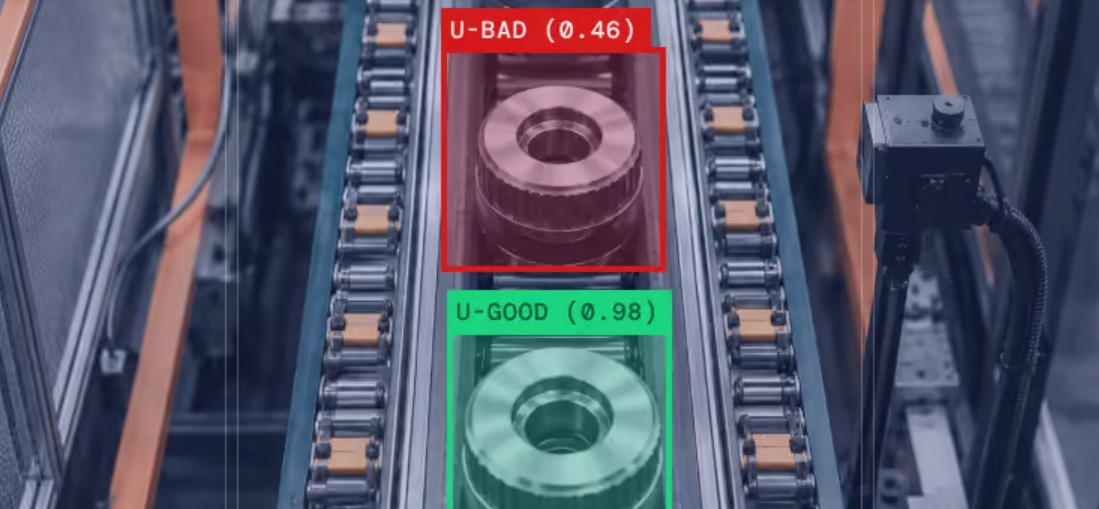
Tristar, an MIT spinout based in Boston, starts from the model rather than the hardware. Off-the-shelf industrial cameras feed a compact on-prem GPU server running foundation models built for plastics, metals, films and stamped parts. Every part is inspected in-line and in real time, and plant teams can trace defects back to their upstream cause in minutes.
That changes the economics of machine vision without giving up accuracy. A station costs a fraction of legacy systems, goes live in weeks on the cameras, PLCs and MES a plant already runs, and reaches 99% precision on the reflective surfaces that trip up other models. So plants can roll it out line after line instead of justifying one expensive install. Customers have noticed. Plants that start with Tristar on a single line quickly add more lines and more facilities, and that pull has driven accelerated growth over the past year across North America and Europe.
A Model That Gets Smarter With Every Line
Anyone can buy a camera. Far fewer have models trained on real parts failing on real production lines. Every deployment makes Tristar's models better for that material, and once Tristar is wired into a plant's PLCs and trained on its defect catalogue, it becomes part of how that plant runs.
We saw this first-hand in pilots at Gestamp, one of our trusted innovation partners. Tristar started on welding lines, then moved to hot stamping, Gestamp's core process, and on to laser cutting, each with its own defects to catch, from surface scratches to material thinning. The same platform followed the work from one process to the next.
Our Thesis: Physical AI Starts With Quality
At Isogon, we back physical AI that works on the factory floor from day one, and quality control is one of the clearest places for it to prove its value. Every plant has it, and it remains one of the least automated workflows in manufacturing
Three shifts make this the moment. Compute is getting cheaper far faster than specialist optics, moving the value in machine vision from the camera to the model. Manufacturing is becoming more flexible, with shorter runs, more customization and frequent line changes, so inspection has to adapt without costly re-engineering every time. With an aging workforce, tariff pressure and tighter margins, manufacturers face growing pressure to maintain consistent quality without relying solely on manual inspection.
Detecting defects is only the starting point. The bigger opportunity is understanding why they happen: tracing them to their root cause, preventing them, and ultimately optimizing the process itself. The winners won't sell inspection stations one line at a time. They will own models trained on factory-floor data, run across every line, and become the production intelligence layer of the plant. That is what Tristar is building.
The Team
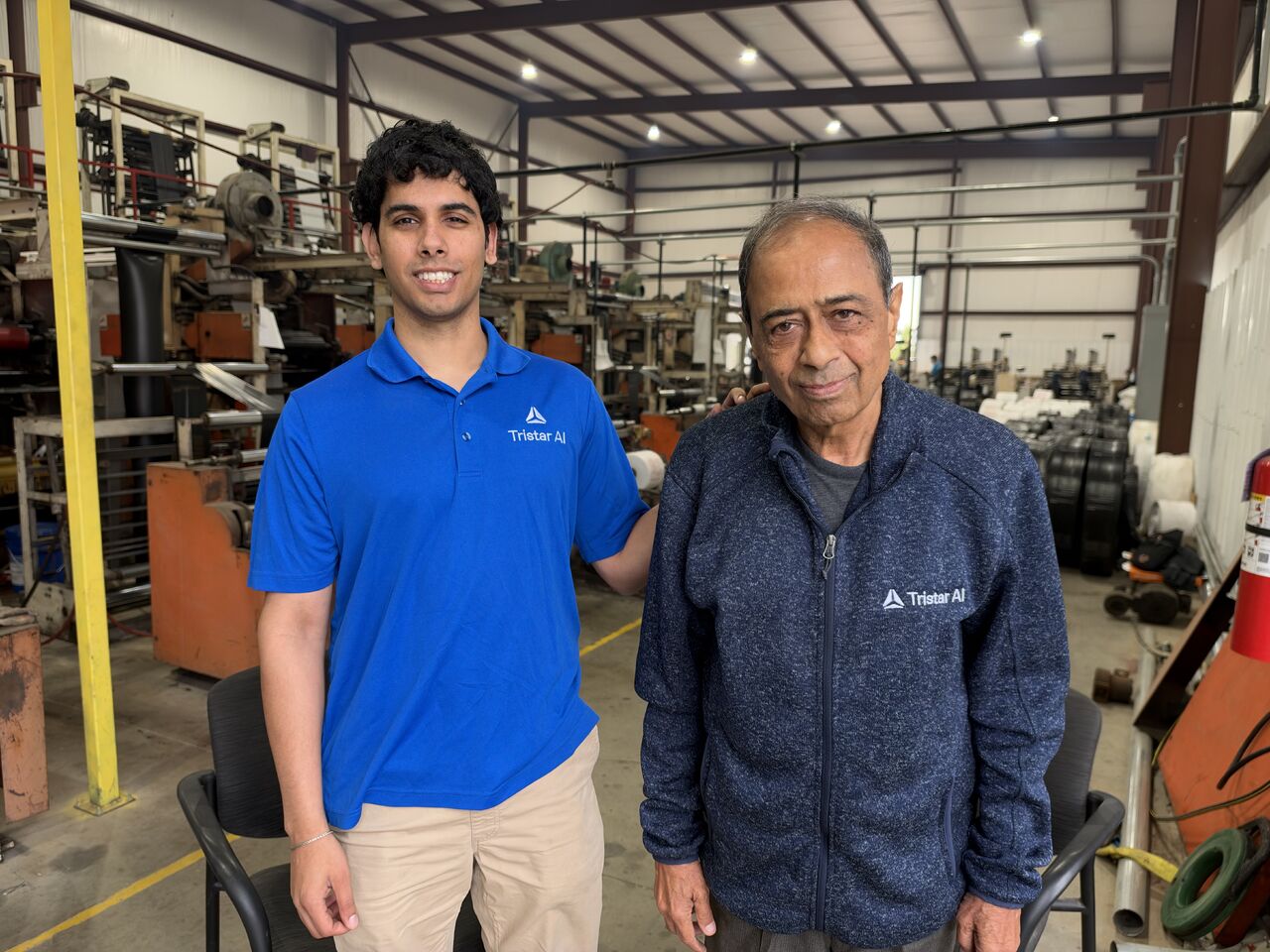
Salem grew up inside the problem. His family runs a plastics manufacturing business, and he watched his father spend sleepless nights at the plant fixing problems on the line. From our first conversations, a full day together in Madrid and a visit to their Boston office, his energy and conviction stood out.
Jack Liu brings nearly a decade at automakers building real-time vision algorithms, and leads model development and customer deployments. Around them is a heads-down team out of MIT and Harvard that ships fast and stays close to customers. If you need Salem on a Saturday, try the office.
What Comes Next
From here, the focus is scale: building out the commercial team, expanding across more lines and plants, and moving into new material categories. We’ll be alongside Salem and the team throughout, building on the pilots Tristar is already running with companies in Isogon’s industrial network. Salem, Jack and team: welcome to the Isogon portfolio.